
국내기타
바둑세계화 선도할 지도자 배출 목표!
「권갑용바둑도장」에서 「권갑용국제바둑학교」까지
2013-04-22 오후 12:08:02 입력 / 2013-04-22 오후 5:47:59 수정
Baduk finally comes to the world
Searching for a leader in the global baduk revolution
From the Kwonkapyong Baduk Institute to Kwonkapyong International Baduk Academy, the South Korean school is once again ahead of the competition.
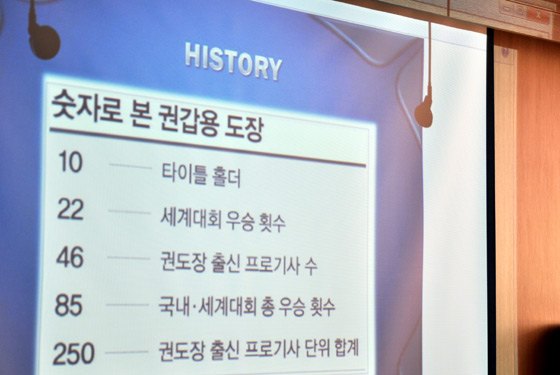
In 1983, the Kwonkapyong Baduk Institute opened, where baduk master Kwonkapyong produced 46 professional baduk players, including Se-Dol Lee, Jeong-Hwan Park, and Chul-Hwan Choi. With former students representing the top six players in South Korea, Kwonkapyong and his students form an integral piece of the baduk community.
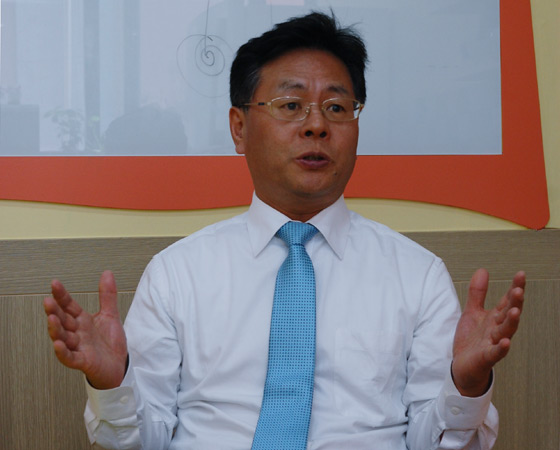
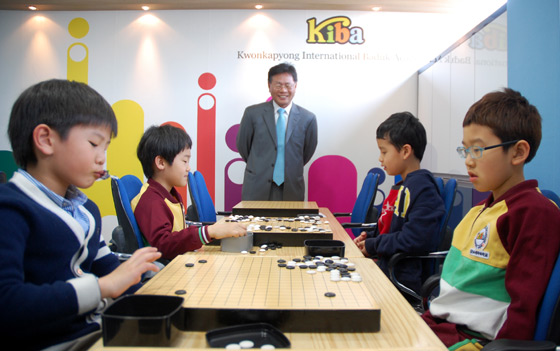
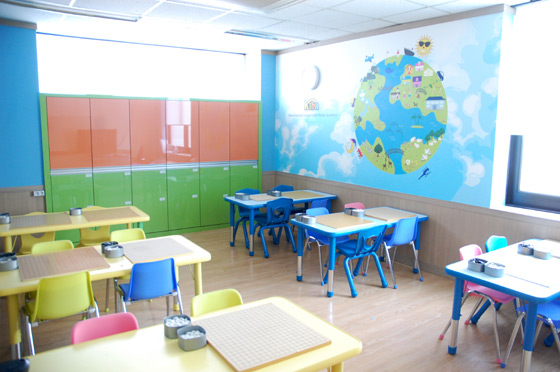
At age 56, famed instructor Kwonkapyong is now the principal at Kwonkapyong International Baduk Academy (KIBA). Located in the Banpo neighborhood in the heart of Seoul, the school also provides its students with English instruction to foster professional players who can compete in a global society. The academy has already been active for one month
When did you finish with the previous school and move to the new one?
I began teaching 30 years ago. Baduk has changed a lot since then, becoming worldwide in particular. Therefore, the way to teach the game has changed, too. If you look at the school as a family, there are many people involved, and if any one person fails to meet their goals, then the entire family will collapse. So, a holistic education and an aim for the best brains must be treated as one mission in order to have the best players possible. Only after much thought has this new school opened. It has been upgraded to help the students define their character and expression, rather than merely play the game correctly.
What made you change your teaching philosophy?
This is not change for the sake of change. I have been teaching for 30 years and it has been exceptionally rewarding and worthwhile. Moreover, learning baduk leads to professional careers, such as professors and doctors, and a successful life. My students thank me for the wonderful lives they are invariably living because of their education. This is why I want to give students an opportunity to learn baduk from a young age, and this is why I opened the type of school that I have now. The previous method for teaching baduk is old fashioned. For example, someone might want to teach baduk in a foreign country, but then give up because of the language barrier, even though baduk is a great sport. This is exactly the kind of problem I wish to solve, and I’m sure it’s not too late. A good Korean baduk player should jump into the wider world.
So what will happen to the old institute?
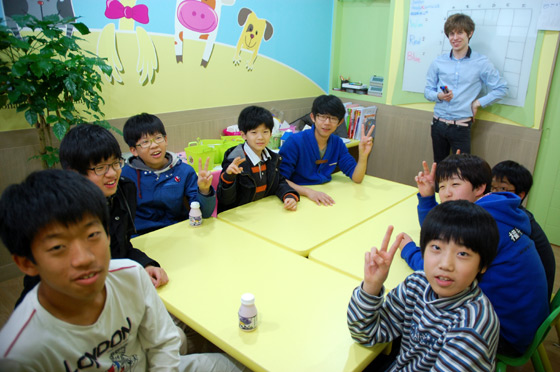
The previous school lives on in the form of KIBA, but it has been improved with the addition of the international language program. It has been open for only one month, but already the parents are fired up and responding positively. The junior high school students have been learning baduk for several years, so they mainly concentrate on the game. But for a younger student who has only recently started on his or her baduk journey, the focus will be divided evenly between baduk and international studies.
Will the varying age and English levels pose an issue?
We have two sections: Kindergarten, and elementary. In kindergarten, the students will learn English and their first steps in baduk. The elementary course follows American curriculum with a more intense baduk course. As well, the foreign and Korean teachers are homeroom teachers together. Everyone in the English program uses English exclusively at all times because it is an international school. It’s not as difficult as it sounds—the children have fun! Chinese is also a part of the curriculum.
You say this is an international school. How does that work?
KIBA is, above all else, recognized by the United States Department of Education, and is officially sanctioned. The US has some of the most respected certificate authorities in the forms of the school evaluation firm AACS (American Association of Christian Schools), the international school accreditation agency AI (Audition International), and the NCPSA (National Council for Private School Accreditation), who have all approved KIBA’s diploma program.
Then there is a great prospective future for graduates?
For students who finish the baduk program, the main course, naturally, is to become a baduk player. If a student applies for a general university, he or she will receive special consideration on his or her application. Students will also have English skills with which they can receive entrance into famous universities in China and the US. Even students from China come to Korea these days to learn baduk. I also think Europe and America are interested in Asian culture, so the worldwide population of baduk players is increasing. Unfortunately, there is no leader and there is a lack of good teachers.
Let’s talk about the schooling. What is the curriculum like?
Kindergarten English classes start at 9:00 a.m. and finish at 2:00 p.m. From 3:00 until 9:00 they learn baduk in a fun environment. All of the teachers here are very professional and understand child development. Middle and high school students are already proficient at baduk and are very keen to study English, so they study the language for one or two hours.
You told me the parents’reactions are very positive. Can you detail that for me?
Even though some parents don’t know baduk beforehand, they show interest in the game after visiting KIBA. Combining English with a baduk program is a fairly new concept, so it can startle and amaze the parents to see this all-in-one approach to education. There are nearby schools whose students come to KIBA to enjoy our afterschool programs as well. Students from China and Hong Kong also participate in our trial program to get a feel for our unique approach.
How does KIBA’s kindergarten program compare to that of a typical school?
arents know immediately that our professional team translates into a great learning environment for their children. Because of our organization and vision, parents are already pleased with the results. Through baduk, our satisfaction and the students’ personal happiness have been high. Thanks to this, their skills improve more quickly.
Do you have anything to add about your aspirations?
Forty-six of my students have already gone on to become professional players. They include Si-Hun Ryu from Japan, Su-Jun Kim from Korea, as well as Cheon Seu Wien and Jang Jeong Ping from Taiwan. My first daughter, Hyo-Jun Kwon, is marred to professional Chinese player WaiRyang, so we have worldwide presence. The motivation for KIBA was born ten years ago, when English and Chinese teachers began to teach baduk. Of course, our institute still runs well, but, over the past 30 years, our situation has shifted, and the way to be successful is to adapt to changing times, particularly in the face of globalization. I don’t know that any method of teaching baduk is perfect, but I believe that KIBA’s method is at the forefront. Please keep watching our school and cheer us on for the future!